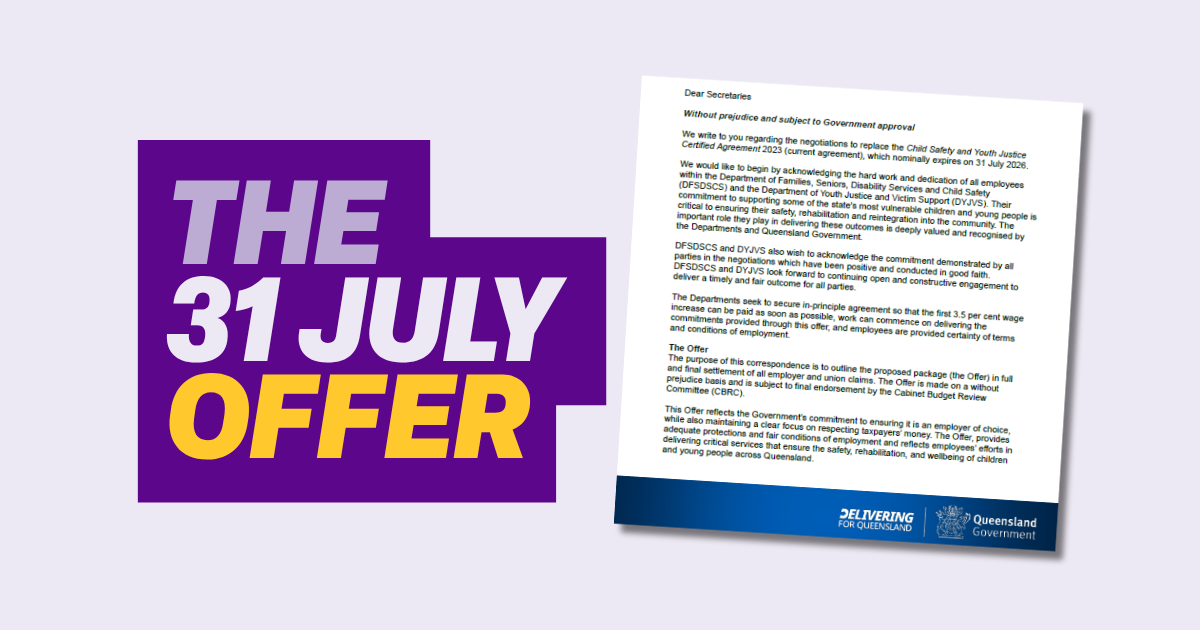
Offer Made: The Departments had a choice. They chose the status quo.
The Departments have chosen the status quo in Child Safety negotiations, offering inadequate solutions to pressing workload and safety concerns.
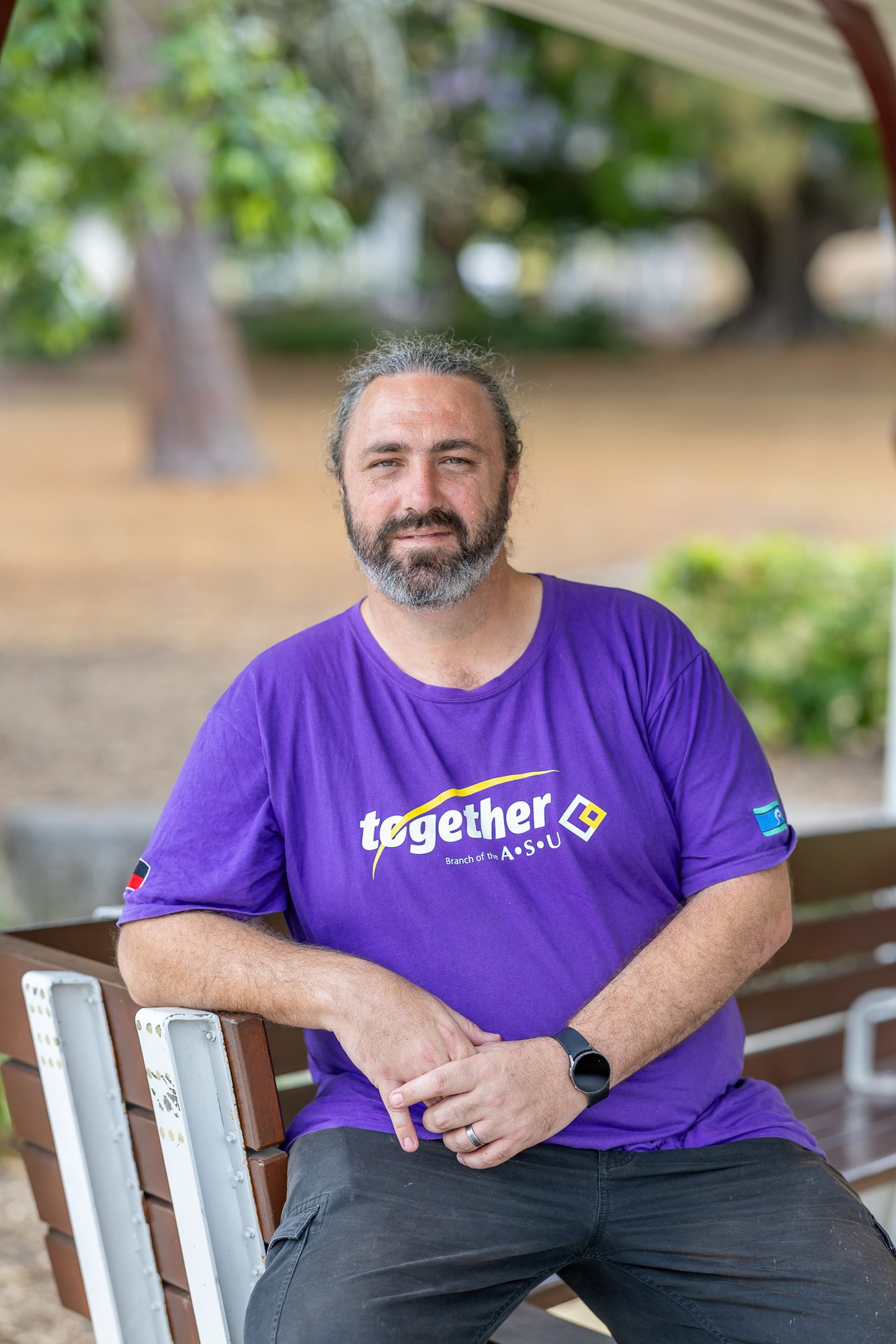

When working people band together, they’re much more likely to get decent wages and be treated well at work.
In 2026 union members in Child Safety and Youth Justice will be campaigning to secure a brighter future, not only for your wages and conditions, but for the Queenslanders you serve each and every day.
Your Collective Agreement sets your pay and conditions. When it expires, Together members renegotiate, through collective bargaining, to secure higher wages, safer workloads, and better conditions. Under Queensland law, collective bargaining is the main way conditions are negotiated and won.
The Departments have chosen the status quo in Child Safety negotiations, offering inadequate solutions to pressing workload and safety concerns.

Together members in Queensland launch Stage 1 Protected Industrial Action to address unsustainable pressures in Child Safety and Youth Justice services.
Union delegates are pushing for better workload management and ATL rights amid department negotiations, but the response remains insufficient. Stay informed and engaged.
A supplementary ballot for Child Safety negotiations opens on July 13. All members must vote in both ballots for their voice to be fully counted.
Participate in the Child Safety Protected Action Ballot from July 6-17. Your vote matters in strengthening our collective voice for better conditions.
Negotiations for pay parity and classifications in Child Safety and Youth Justice are ongoing, addressing key issues and pushing for fair wages and career pathways.
What is collective bargaining?
Collective bargaining is how union members, through your union, negotiate a new agreement covering pay, hours, safety, progression and protections.
Why it matters in Child Safety & Youth Justice:
Better staffing and safer caseloads. Stronger supports after critical incidents. Recognising the realities of remote work and vicarious trauma. Fair pathways for AO classifications and specialist roles.
It’s not just about improvement: What could be at risk.
During bargaining, the employer can propose changes that may reduce your entitlements, cut allowances, or weaken protections. Without strong union participation, there’s a risk of losing hard-won conditions or seeing workloads increase. Bargaining is your chance to protect what matters most, make improvements , and to stop cuts before they happen.
Standing together matters most.
The more members who stand together, the stronger your voice. When you and your colleagues act collectively, you can secure improvements, defend your rights, and ensure the agreement reflects the real needs of departmental staff and the communities you serve.