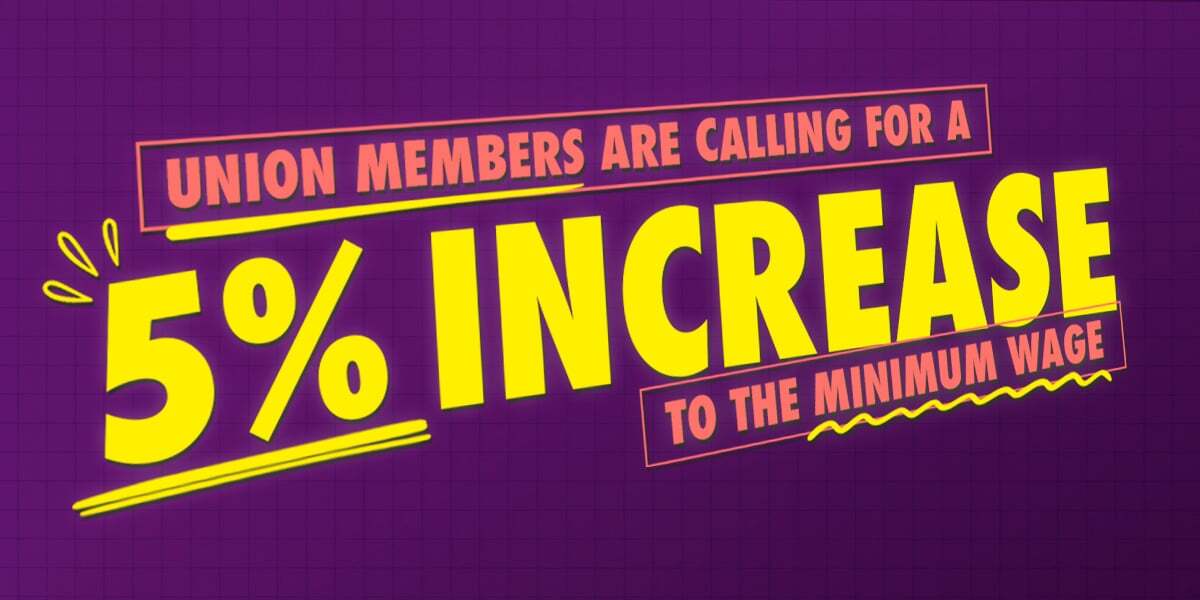
Australian unions this week lodged a 5% wage claim with the Fair Work Commission, kicking off the 2026 Annual Wage Review. It's a claim workers have earned — and one the evidence demands. What's being claimed? The ACTU's claim would lift the minimum wage to $26.19 per hour, adding $2,465 a year to bring the full-time annual rate to $51,761. The claim directly affects nearly 3 million workers whose pay is set by awards and it sets the wage floor that flows through to millions more. ACTU Secretary Sally McManus has made clear that 5% is a starting position, not a ceiling. Unions are reserving the right to increase the claim ahead of Fair Work Commission hearings, with McManus warning that workers cannot be allowed to fall further behind as global instability continues to drive up prices. Why 5%? Because workers are already behind. This claim is grounded in the numbers. Wages grew just 3.4% in the year to December 2025, below inflation for the same period of 3.8%. The Reserve Bank now forecasts inflation will reach 4.2% by June. Without a real pay rise, that is one that outpaces inflation, workers' living standards go backwards again. Many low-paid workers are still catching up from the post-COVID inflation surge, and a typical full-time award wage worker would be nearly $2,500 a year better off today if wages had kept pace with inflation since mid-2021. Rents are climbing. Petrol is above $2.40 a litre and still increasing. Interest rates have risen twice this year. The cost-of-living pressure on Queensland workers is real and a 5% minimum wage rise is the most direct lever available to start closing the gap. What about employers' claims that wage rises cause inflation? Employer lobby groups, led by the Australian Chamber of Commerce and Industry, are pushing a much lower 3.5% increase, arguing that above-inflation pay rises add to price pressures. The union movement has rejected this outright. McManus said there is no evidence that increases in the minimum wage or award wages have had any impact on inflation, and that a 5% boost for lower-paid workers would add just 0.6% to the national wage bill. Meanwhile, the entire cost of our wage claim is less than BHP's recent $8 billion half-yearly profit. What has actually driven inflation, the ACTU argues, is housing costs and price-gouging by fuel and energy companies. Not workers' wages. What happens next? Initial submissions to the Annual Wage Review closed this week. The Fair Work Commission will hold hearings before handing down its decision in June. Together and union members across the ASU will be backing the ACTU's claim every step of the way. Minimum and award wage increases set the floor under every worker's pay, strengthen our bargaining position, and send a clear signal about what Australian workers are worth. A good outcome is worth fighting for. This is our fight — and it's winnable. This AWR decision affect workers everywhere. It directly affects the millions of workers who cannot bargain for better wages. It also affects Queensland Public Sector workers. If you want to find out more how the Fair Work Commission's decision affects your pay - read the blog here. Have questions about how the Annual Wage Review affects your pay or enterprise agreement? Check the member portal or talk to your Together delegate.
Every year, a process quietly unfolds inside Australia’s industrial relations system that determines the minimum wage for millions of workers. It’s called the Annual Wage Review, and right now, submissions are being prepared, evidence is being gathered, and your union is fighting to make sure your voice is front and centre of this important decision. Here’s how it all works. What Is the Annual Wage Review? The Annual Wage Review (AWR) is the process by which the Fair Work Commission (FWC) sets the National Minimum Wage and minimum rates across all modern awards each year. It replaced the old “National Wage Case” process when the Fair Work Act came into effect in 2010, but the purpose remains the same: to ensure that the lowest-paid workers in Australia receive a fair and sustainable wage increase. This is especially important for workers who don't have the facility to collectively bargain for better wages. The review is conducted by the FWC’s Expert Panel — a seven-person body made up of a President, three full-time members, and three part-time members with expertise in workplace relations, economics, social policy, and commerce. A central purpose of the review is to ensure that award wages keep pace with the cost of living, so that workers covered by modern awards can maintain their living standards over time, not just survive on a static wage that erodes in real terms as prices rise. The Submission Process The process kicks off months before the decision is made. Any individual, business, union, or organisation can lodge a formal submission with the Fair Work Commission outlining their case for what the wage increase should be (or shouldn’t be). Submission are happening right now, meaning the window to influence the outcome is open. Employer groups typically argue for modest increases, citing business costs and economic conditions. These groups are organised and they sing from the same song sheet - we need to be as organised to fight that kind of lobbying power. Unions push for increases that reflect the true cost of living and protect the real value of award wages over time. But we know that unions are only as strong as their members. For the FWC to take notice, members from across the country must get involved and build the case for good wage outcomes in this decision. The Role of the ACTU and the ASU As the peak organisation for trade unions the ACTU coordinates the movement’s submission to the FWC, presenting national data on cost of living, wage growth, inflation, and the economic capacity of employers to absorb wage increases. Their submission sets the broad position for all affiliated unions and carries significant weight with the Expert Panel. Our union, the ASU, plays a vital role by representing workers in community services, social and disability services, state and local government, and a range of other sectors, many of whom are directly affected by award wage decisions. Importantly, the ASU doesn’t just rely on economic data. Each year, the ASU surveys members before the case to capture the real-life impact of wages on workers’ day-to-day lives. These are stories about meeting rent, covering school costs, and stretching a pay packet to the end of the fortnight. These member voices form the workers' evidence that sits alongside the statistics in the ASU’s submission to the FWC. This on-the-ground testimony is powerful. It reminds the Expert Panel that behind every percentage point is a real person, and that wage decisions have consequences that go far beyond a spreadsheet or balance book. How the Decision Is Made After submissions close, the FWC holds public hearings where parties can present their case. The Expert Panel then weighs a range of factors including inflation, the real value of award wages, relative living standards, employment levels, economic conditions, and gender pay equity. A key consideration is whether award wages are keeping pace with the broader economy ensuring that workers on awards don’t fall behind as the cost of housing, groceries, energy, and essential services continues to rise. In recent years, cost-of-living pressures have dominated the deliberations. The 2023 decision delivered the largest increase in roughly 40 years, while subsequent years have seen more moderate outcomes as inflation has eased. Once the Panel reaches its decision (typically announced in late May or early June) the new rates take effect from 1 July. Why It Matters - get involved now! Now is the time to get involved in this process. The FWC needs to hear workers voices loud and clear before they hand down their decision. For workers on award wages, this annual process is one of the most consequential decisions made about their financial wellbeing. The modern award system exists to ensure that wages don’t simply reflect what employers are willing to pay, but what workers genuinely need to maintain a decent standard of living. Unions will be arguing that the workers need a substantial pay increase in 2026. Cost of living is still front of mind for many workers and only strong wage increases will help ease that burden for Australia's lowest paid workers. COMING SOON: KEEP AN EYE OUT for the ASU’s member survey so you can get involved in this process. Your experience matters and it could make a real difference to the outcome.