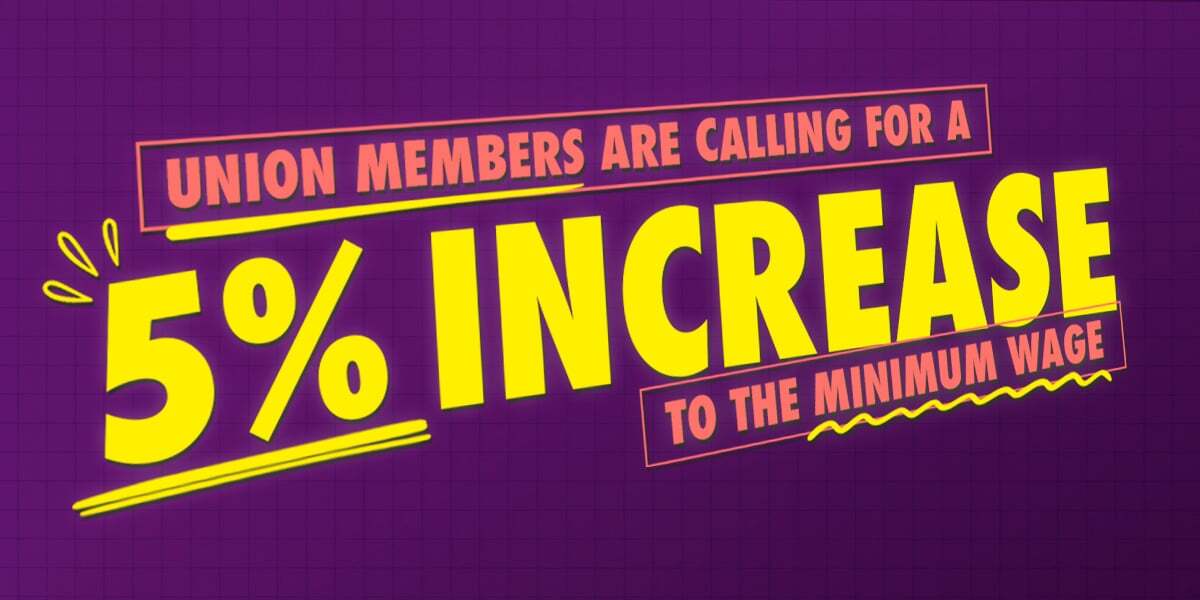
Australian unions this week lodged a 5% wage claim with the Fair Work Commission, kicking off the 2026 Annual Wage Review. It's a claim workers have earned — and one the evidence demands.
What's being claimed?
The ACTU's claim would lift the minimum wage to $26.19 per hour, adding $2,465 a year to bring the full-time annual rate to $51,761. The claim directly affects nearly 3 million workers whose pay is set by awards and it sets the wage floor that flows through to millions more.
ACTU Secretary Sally McManus has made clear that 5% is a starting position, not a ceiling. Unions are reserving the right to increase the claim ahead of Fair Work Commission hearings, with McManus warning that workers cannot be allowed to fall further behind as global instability continues to drive up prices.
Why 5%? Because workers are already behind.
This claim is grounded in the numbers. Wages grew just 3.4% in the year to December 2025, below inflation for the same period of 3.8%. The Reserve Bank now forecasts inflation will reach 4.2% by June.
Without a real pay rise, that is one that outpaces inflation, workers' living standards go backwards again. Many low-paid workers are still catching up from the post-COVID inflation surge, and a typical full-time award wage worker would be nearly $2,500 a year better off today if wages had kept pace with inflation since mid-2021.
Rents are climbing. Petrol is above $2.40 a litre and still increasing. Interest rates have risen twice this year. The cost-of-living pressure on Queensland workers is real and a 5% minimum wage rise is the most direct lever available to start closing the gap.
What about employers' claims that wage rises cause inflation?
Employer lobby groups, led by the Australian Chamber of Commerce and Industry, are pushing a much lower 3.5% increase, arguing that above-inflation pay rises add to price pressures.
The union movement has rejected this outright. McManus said there is no evidence that increases in the minimum wage or award wages have had any impact on inflation, and that a 5% boost for lower-paid workers would add just 0.6% to the national wage bill. Meanwhile, the entire cost of our wage claim is less than BHP's recent $8 billion half-yearly profit. What has actually driven inflation, the ACTU argues, is housing costs and price-gouging by fuel and energy companies. Not workers' wages.
What happens next?
Initial submissions to the Annual Wage Review closed this week. The Fair Work Commission will hold hearings before handing down its decision in June.
Together and union members across the ASU will be backing the ACTU's claim every step of the way. Minimum and award wage increases set the floor under every worker's pay, strengthen our bargaining position, and send a clear signal about what Australian workers are worth. A good outcome is worth fighting for.
This is our fight — and it's winnable.
This AWR decision affect workers everywhere. It directly affects the millions of workers who cannot bargain for better wages.
It also affects Queensland Public Sector workers. If you want to find out more how the Fair Work Commission's decision affects your pay - read the blog here.
Have questions about how the Annual Wage Review affects your pay or enterprise agreement? Check the member portal or talk to your Together delegate.